5th North American Ornithological Congress

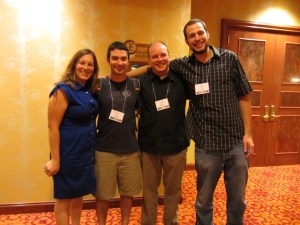
Nick Mason and Kevin Burns recently attended the 5th North American Ornithological Congress in Vancouver. Nick presented his work on evolutionary correlates among vocalizations, habitat, and plumage color in tanagers. This work represents a collaboration between Nick, Kevin, and former Burns lab student Allison Shultz. Nick’s presentation received a student travel award and was a finalist for a presentation award. At the meetings we were also able to connect with former Burns lab student Bill Mauck who now works for the American Museum of Natural History. Bill gave a very nice presentation on phylogeography of the Red-shouldered Hawk. Other highlights of the meeting for us were a symposium on next generation sequencing, in particular a very informative talk on ultraconserved elements by John McCormack from Occidental College. Other favorite talks include Andrés Cuervo’s presentation on comparative phylogeography of Andean birds and Katherine Stryjewski’s presentation on speciation genomics of Lonchura. Overall, these were great meetings with 1500 attendees and many excellent evolution/systematics talks.
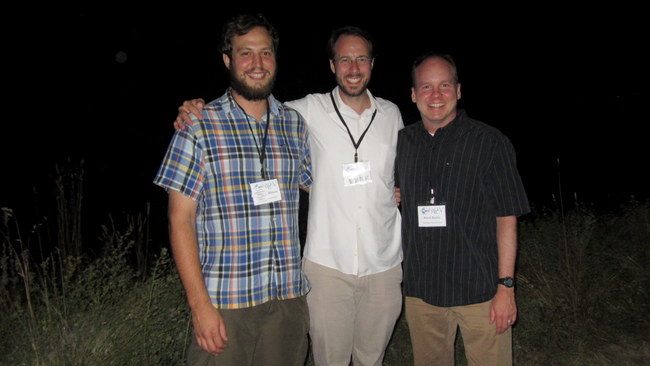
NickMasonBillMauckKevinBurns

Nick Mason, Bill Mauck, and Kevin Burns at the 5th NAOC in Vancouver, BC
Posted in Uncategorized | Comments Off on 5th North American Ornithological Congress

Congratulations Pascal!

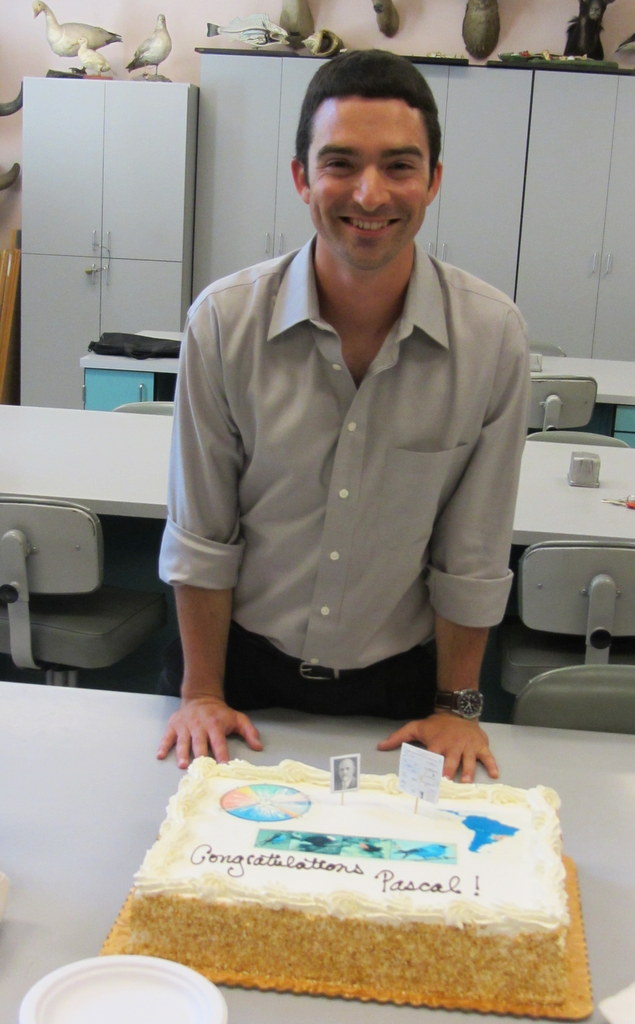
Congratulations to Pascal Title who recently defended his MS thesis on niche evolution in tanagers. Pascal’s thesis adds another dimension to our ongoing studies of tanager diversification. Pascal used environmental data in combination with georeferenced occurrence data to see if climatic niche evolution is correlated with diversification rates in tanagers. In addition, Pascal looked for patterns of niche divergence and niche conservatism among closely related species of tanagers. The result was a nice, integrated thesis that required mastery of a variety of subjects. Now that he is finished with his MS, Pascal will soon begin working on his PhD in Dan Rabosky’s lab at the University of Michigan. We wish him the best of luck!

Pascal Title

Posted in Uncategorized | Comments Off on Congratulations Pascal!

New paper published showing widespread cryptic dichromatism and ultraviolet reflectance

Burns, K. J. and A. J. Shultz. 2012. Widespread cryptic dichromatism and ultraviolet reflectance in the largest radiation of Neotropical songbirds: implications of accounting for avian vision in the study of plumage evolution. The Auk 129: 211-221. pdf

We just had a new paper published in The Auk, representing a collaboration between Burns and recent graduate student Allison Shultz. In this study, we used a spectrometer to quantify plumage in the cardinals and tanagers, which together make up the largest radiation of Neotropical songbirds. We found that almost half of the species have ultraviolet coloration in their plumage. This is coloration that birds can see, but humans and other mammals are unable to detect. Also, 97% of the birds appear sexually dichromatic to birds even though only about half look sexually dichromatic to humans. Therefore, we found many examples of species where males and females look different to birds, but seem identical to humans. Our paper was picked by the editor of The Auk as an Editor’s Choice.

Update: this article ended up being the most downloaded article in The Auk for 2012!

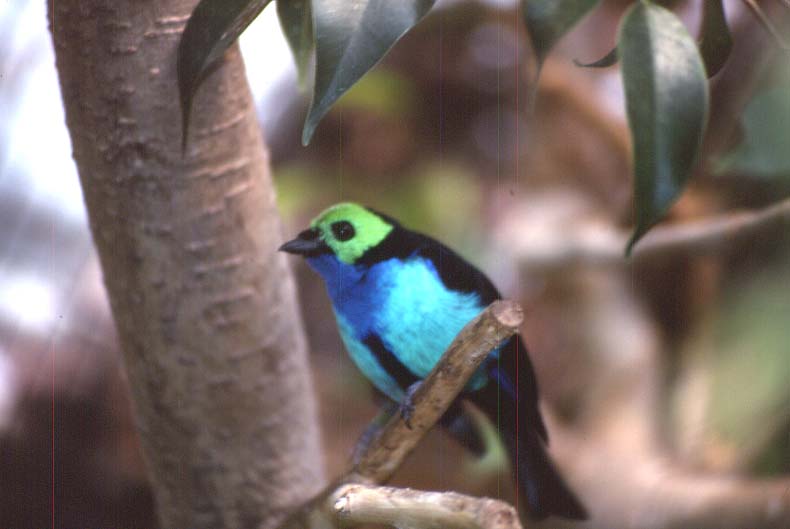
Tangara chilensis

The Paradise Tanager (Tangara chilensis) is one of the most colorful tanagers. Is this a male or female? Humans can’t tell, but birds can.

Posted in Uncategorized | Comments Off on New paper published showing widespread cryptic dichromatism and ultraviolet reflectance

Congratulations Nick!

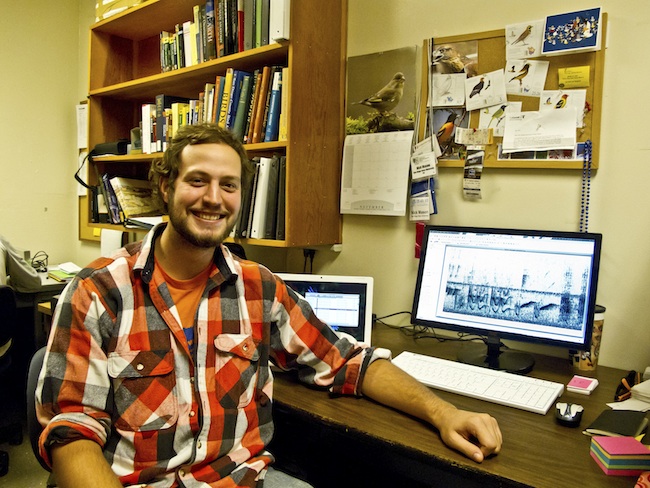
Congratulations to Nick Mason, who successfully defended his MS thesis on the evolution of song within tanagers. His research compliments other research in the lab on the evolution of plumage, morphology, and ecological niche in tanagers. Specifically, he looked at whether there was a negative correlation between elaborate song and elaborate plumage, and whether plumage was correlated with habitat across the evolutionary history of tanagers. Nick will be leaving the Burns lab soon, to begin PhD studies in Irby Lovette’s lab at Cornell University.

Nick Mason

Nick analyzing tanager songs

Posted in Uncategorized | Comments Off on Congratulations Nick!

Congratulations Luke!

Burns lab graduate student Luke Klicka recently received three grants to help fund his project investigating the phylogeography of the Bell’s Vireo. The Bell’s Vireo is a widespread North American species consisting of four subspecies. However, no genetic data has been used to address the distinctiveness of these subspecies. Of particular interest is the Least Bell’s Vireo subspecies, a federally endangered subspecies that breeds in riparian habitat in southern California and northern Baja California. Luke is investigating the population genetic structure across the species to better inform conservation action. We thank the American Museum of Natural History (Frank M. Chapman Award), the American Ornithologists’ Union, and the Los Angeles Audubon Society (Ralph W. Schreiber Award) for helping fund this important work!

Posted in Uncategorized | Comments Off on Congratulations Luke!

2011 Biosymposium

Burns lab graduate student Nick Mason was one of three graduate students asked to speak at this year’s Bio Department Symposium. He presented some of his work on plumage and song evolution in the genus Sporophila (neotropical seedeaters) that he is working on in collaboration with former Burns lab student Allison Shultz.  Nick’s research provides evidence for the transfer hypothesis, whereby selection targets vocal signals in some species and plumage signals in others.  Great talk Nick!

Nick Mason Biosymposium

Posted in Uncategorized | Comments Off on 2011 Biosymposium

Welcome Luke!

We recently welcomed a new MS student into the Burns lab, Luke Klicka.  As an undergraduate, Luke worked in the lab, field, and museum on a variety of projects.  He is a graduate of the University of Minnesota where he worked in the labs of Bob Zink and Keith Barker.  He has also worked in the lab and in the field with his uncle, John Klicka.  Luke is still exploring potential thesis topics, but his project will likely involve conservation genetics of an avian species.

Luke Klicka

Posted in Uncategorized | Comments Off on Welcome Luke!

Good-bye Allison!

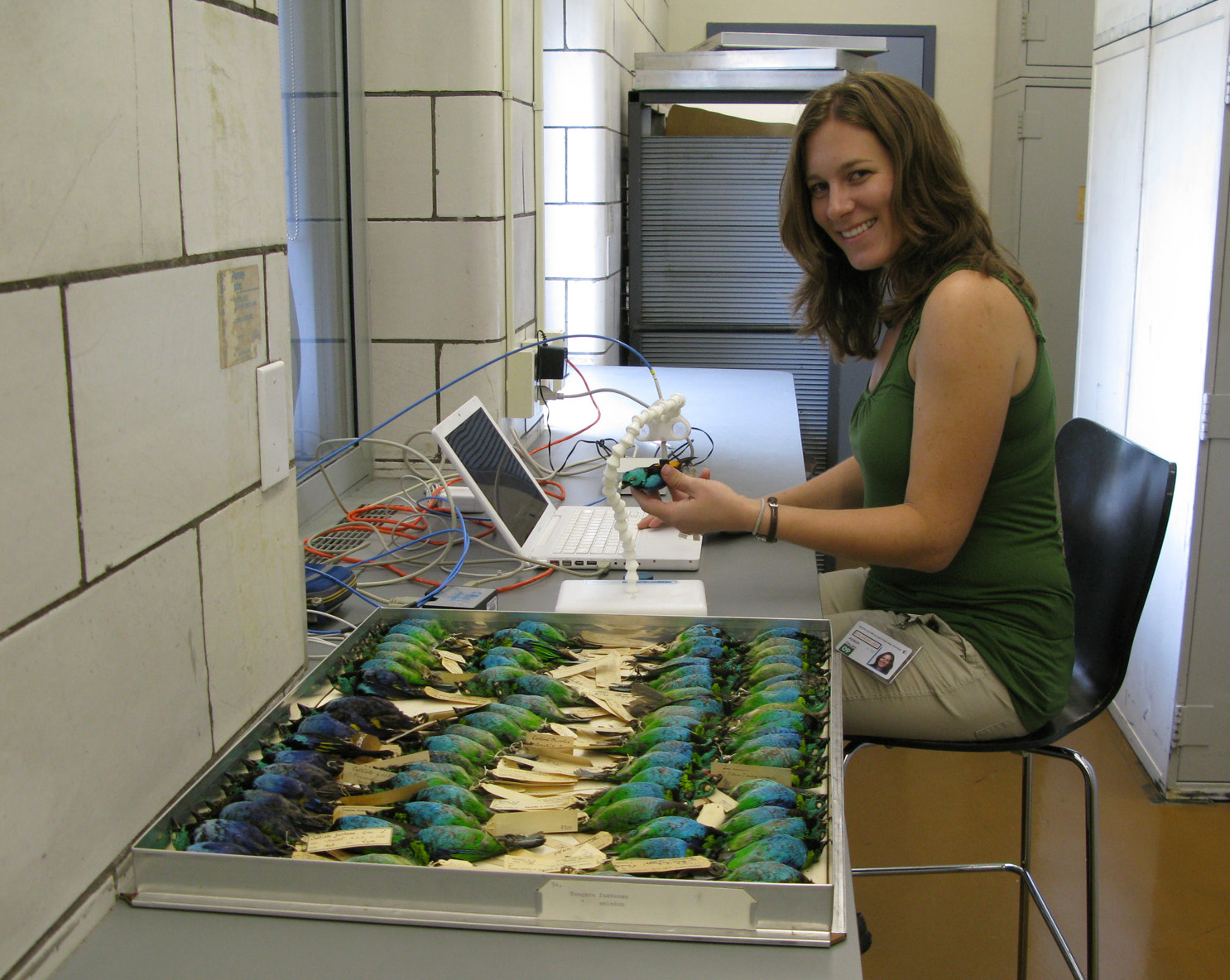
We said goodbye to Allison Shultz in August. Allison recently completed her MS thesis on the evolution of plumage coloration in tanagers. She studied the evolution of plumage in tanagers using a model of avian vision.  She gathered thousands of spectrophotometer readings for males and females of all species of tanagers.  She then applied comparative methods to learn about color evolution using the phylogeny for tanagers. She is continuing her studies in Scott Edward’s lab at Harvard University where she will be pursuing her PhD. Good luck Allison!

Allison Shultz

Posted in Uncategorized | Comments Off on Good-bye Allison!

Summer 2011

The Burns lab had a busy Summer 2011.  Four of us went to the Evolution meetings in Norman, Oklahoma where Allison, Pascal, and Nick all presented some of the results of their MS theses. Nick also presented a talk at the American Ornithologists’ Union meeting in Jacksonville, Florida and his team also won 2nd place in the student quiz bowl. Speaking of Nick, he spent most of his summer at UC Berkeley where we did an internship in Dr. Rauri Bowie’s lab through the Sally Casonova predoctoral fellowship program.

Burns Lab Evolution Meetings

Allison, Pascal, Kevin, and Nick at Evolution 2011 meetings

Posted in Uncategorized | Leave a comment