Welcome Erik and Brian!

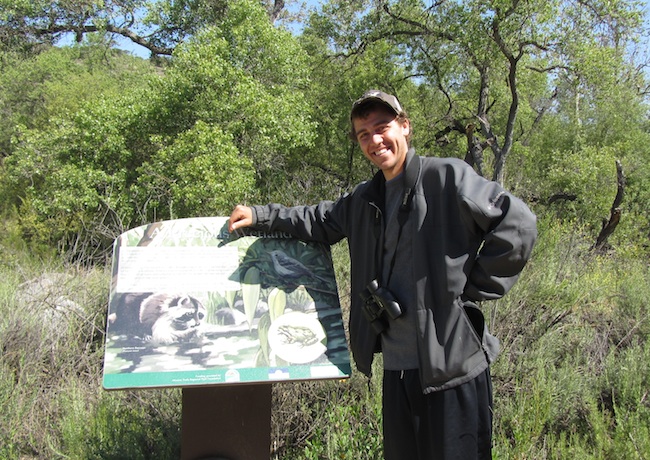
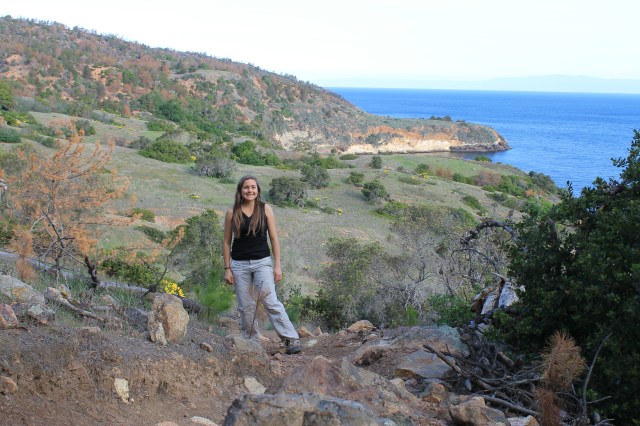
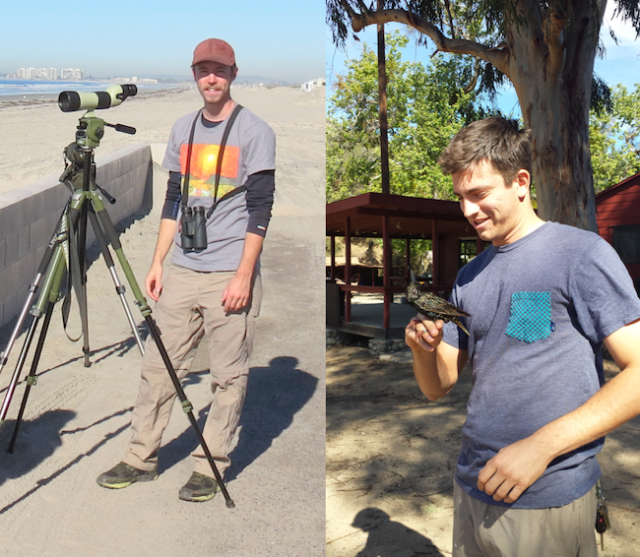
The Burns lab welcomes two new graduate students this fall. Erik Funk is a new MS student and earned a BS in Environmental Science from SDSU. Erik was actually an undergrad researcher in the Burns lab and was also engaged in several field projects in southern California. Brian Myers is a new PhD student and earned a BS in Environmental Biology at California Polytechnic State University in Pomona. Brian has extensive research and field experience throughout California as well as Hawaii.

Erik Funk Brian Myers

Posted in Uncategorized | Comments Off on Welcome Erik and Brian!

Shannon wins student presentation award!

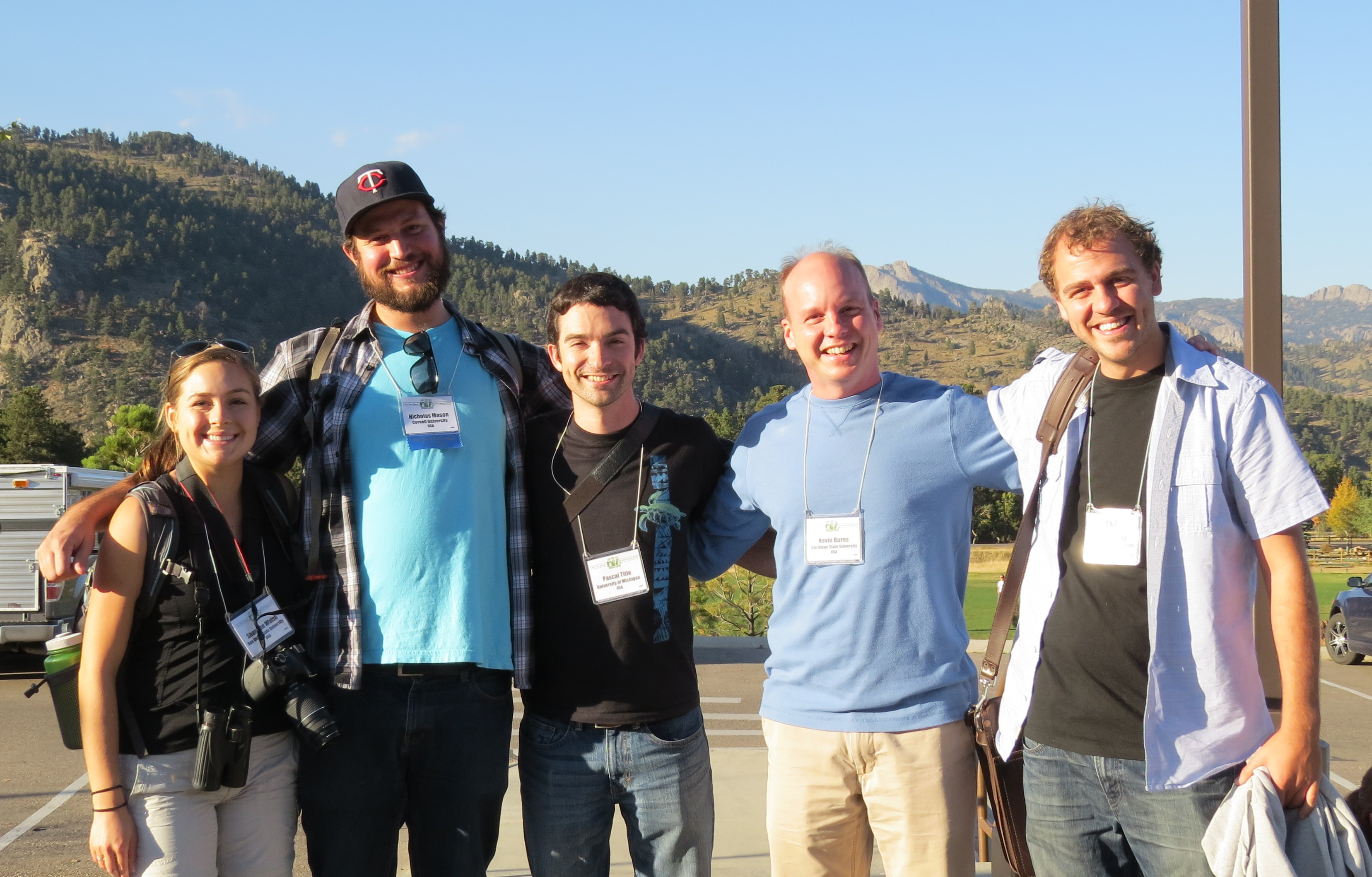
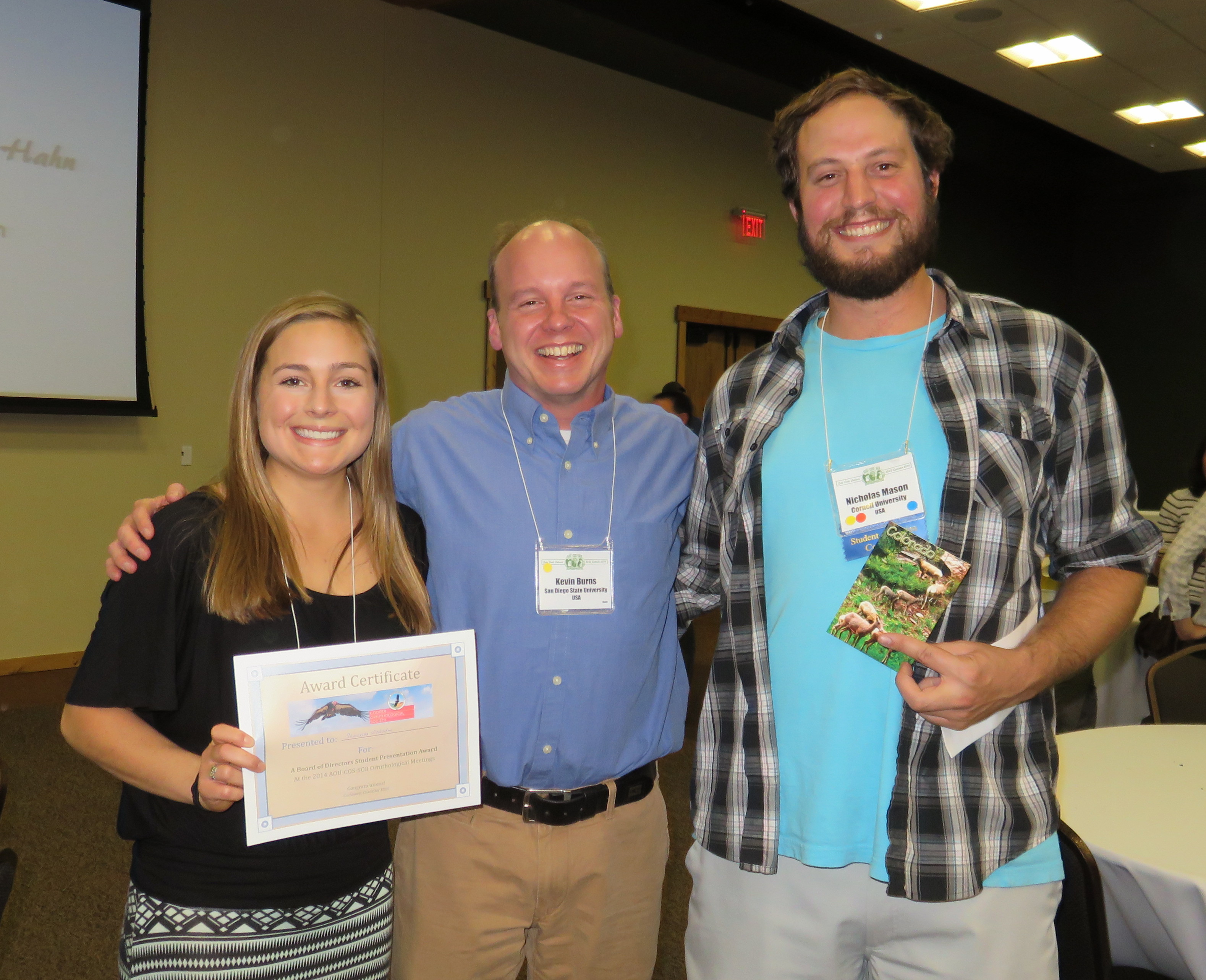
Several Burns lab students past and present attended the recent bird meetings (AOU/COS/SCO) in Estes Park, Colorado. Shannon Walsh received a student presentation award for her talk on his MS thesis research on evolutionary divergence of Spotted Towhees on California’s Channel Islands. Former Burns lab student Nick Mason also won an award for a talk based on some of his PhD research at Cornell on redpolls. There were many great talks at the meeting and the setting was fantastic. After the meeting, Pascal, Shannon, and Kevin went up to the tundra in Rocky Mountain National Park to see White-tailed Ptarmagin and other interesting critters. Some pictures are below and at this link.

Shannon, Nick, Pascal, Kevin, and Luke

Shannon, Nick, Pascal, Kevin, and Luke

Kevin with the award winners, Shannon and Nick

Kevin with the award winners, Shannon and Nick


Posted in Uncategorized | Comments Off on Shannon wins student presentation award!

Upcoming AOU/COS meeting in Colorado

Lots of Burns lab members past and present will be represented at the upcoming joint meeting of the American Ornithologists’ Union and Cooper Ornithological Society in Estes Park, Colorado. Here is a full list of presentations authored or co-authored by past or present Burns lab members*. Looking forward to seeing everyone!

Wednesday, 24 September 2014
Time: 11:30; Location: Emerald Mountain – Bible Point
Walsh, S. E.*; Burns, K. J.*; Cicero, C.; GENETIC AND PHENOTYPIC DIVERGENCE OF THE SPOTTED TOWHEE (PIPILO MACULATUS) ON THE CALIFORNIA CHANNEL ISLANDS

Thursday, 25 September 2014
Time: 11:45; Location: Longs Peak – Keyhole
Title, P. O.*; Burns, K. J.*; NICHE EVOLUTION AND ITS ROLE IN THE DIVERSIFICATION OF TANAGERS

Saturday, 27 September 2014
Time: 10:15; Location: Longs Peak – Keyhole
Klicka, L. B.*; Burns, K. J.*; Title, P. O.; Kus, B. E.; PHYLOGEOGRAPHY AND CONSERVATION GENETICS OF THE BELL’S VIREO

Saturday, 27 September 2014
Time: 11:30; Location: Ruesch Auditorium
Tigano, A.; Shultz, A. J.*; Edwards, S. V.; Friesen, V. L.; TESTS OF LOCAL ADAPTATION ALONG A LATITUDINAL CLINE: A STUDY OF AN ARCTIC SEABIRD.

Saturday, 27 September 2014
Time: 13:30; Location: Ruesch Auditorium
Mason, N. A.*; Taylor, S. A.; DIFFERENTIALLY EXPRESSED GENES UNITE PHENOTYPES AMIDST UNDIFFERENTIATED ANONYMOUS LOCI IN THE PHENOTYPICALLY DIVERSE REDPOLL FINCHES (ACANTHIS)

Saturday, 27 September 2014
Time: 17:00; Location: Longs Peak – Diamond West
Hargrove, L.; Unitt, P.; POOR REPRODUCTIVE SUCCESS OF THE GRAY VIREO (VIREO VICINIOR) IN CALIFORNIA WHERE POPULATIONS ARE DECLINING

Posted in Uncategorized | Comments Off on Upcoming AOU/COS meeting in Colorado

Tanager Song and Plumage Color

Mason, N. A., Shultz, A. J., and K. J. Burns. 2014. Elaborate visual and acoustic signals evolve independently in a large, phenotypically diverse radiation of songbirds. Proceedings of the Royal Society B, Biological Sciences 281 1788 20140967.  pdf

We recently published a paper looking at plumage and song evolution in tanagers. This paper was a major part of Nick Mason’s MS thesis and included Allison Shultz’s plumage data from her MS thesis. Both traits were examined in the context of the large tanager phylogeny we have built in the lab.  In the paper, we test the ‘transfer’ hypothesis which proposes that selection can target either elaborate plumage or elaborate song. In other words, birds can evolve either colorful plumage or elaborate songs, but not both simultaneously. We found little support for this hypothesis and the two traits appear unlinked across evolutionary timescales. This study has broader implications for songbirds as a whole, given that tanagers are the largest family of songbirds.

This article was covered in the media, here are a few links:

Scientific American podcast:
http://www.scientificamerican.com/podcast/episode/beautiful-birds-also-belt-tunes/

Audubon magazine:
http://www.audubonmagazine.org/articles/birds/flashy-feathers-and-great-song-yep-its-possible-after-all

Cornell Lab of Ornithology blog post:
http://blog.allaboutbirds.org/2014/06/20/maybe-birds-can-have-it-all-dazzling-colors-and-pretty-songs-too/

Tanager Top 10 lists:
http://blog.allaboutbirds.org/2014/06/18/the-top-10-most-amazing-looking-and-sounding-tanagers-as-determined-by-science/

Press release:
http://us2.campaign-archive2.com/?u=b35ddb671faf4a16c0ce32406&id=d6208b490b&e

tanagers

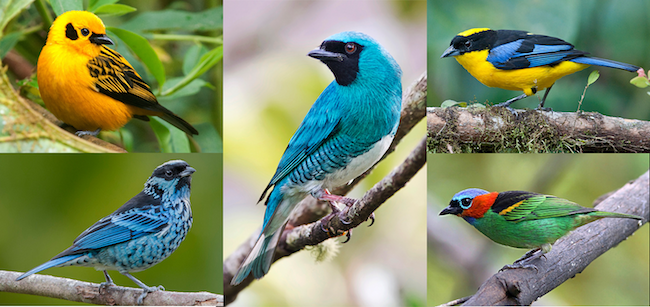
The 371 species of tropical tanagers include some of the most spectacularly colorful birds in the world. Five examples include (clockwise from upper left): Golden Tanager, Swallow Tanager, Blue-winged Mountain-Tanager, Red-necked Tanager, Beryl-spangled Tanager. Photo compilation from Cornell Lab of Ornithology. Photos by Peter Wendelken, Frank Shufelt, Keith Bowers, Vivek Tiwari, and Priscilla Burcher.

Posted in Uncategorized | Comments Off on Tanager Song and Plumage Color

Congratulations Luke!

Congratulations to Luke Klicka who successfully defended his MS thesis on the conservation genetics of the Bell’s Vireo. Luke studied the phylogeography of the Bell’s Vireo across its range using a combination of traditional and next generation sequencing approaches. His study provides the first genetic data for the endangered Least Bell’s Vireo; thus, he was able to provide a modern assessment of its taxonomic status. Luke will soon begin working on his PhD in Rob Moyle’s lab at the University of Kansas and we wish him the best of luck!

LukeKlicka


Posted in Uncategorized | Comments Off on Congratulations Luke!

Congratulations Shannon!

Shannon Walsh, MS student in the Burns lab, just learned she has received funding from the Ralph Schreiber Fund of the Los Angeles Audubon Society to help fund her project. Shannon is working on Spotted Towhees on the Channel Islands. These islands are offshore of southern California and harbor many endemic avian taxa, but few of these have been studied genetically. Shannon has some really cool results so far, but this funding will allow her to include critical missing data. Congrats Shannon!

Shannon Walsh

Posted in Uncategorized | Comments Off on Congratulations Shannon!

New Tanager Phylogeny Paper and New NSF Grant

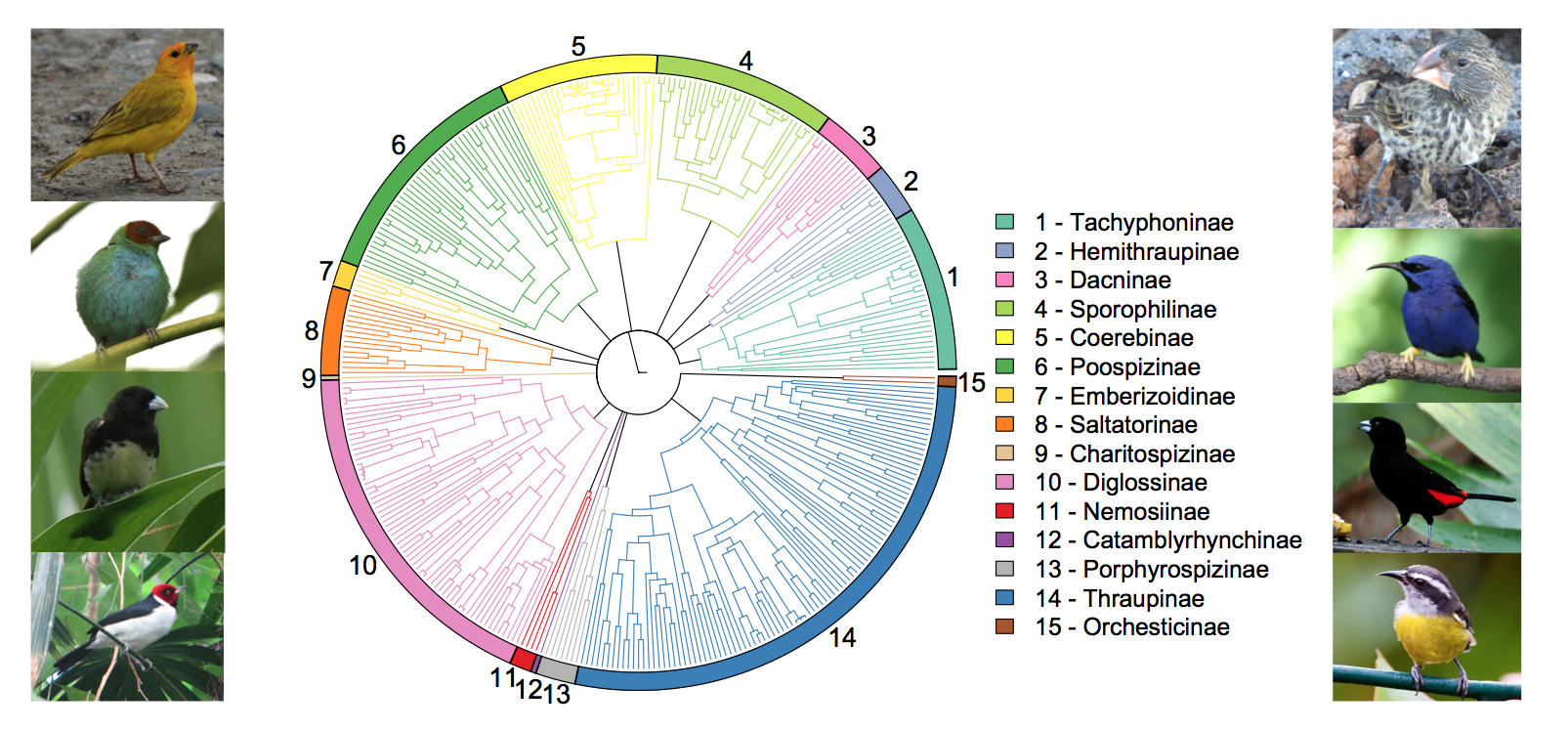
We recently published a multilocus, species-level tree for tanagers in Molecular Phylogenetics and Evolution. This paper represent the culmination of many years of work and will appear in the June issue, although it is currently available online in its final form. Please email kburns@mail.sdsu.edu, if you would like a pdf. Tanagers are the second largest family of birds and represent about 4% of all species. Species vary in plumage colors and patterns, foraging behaviors, vocalizations, ecotypes, and habitat preferences. This phylogeny provides the necessary framework we will be using to study the evolution of these diverse characters. In addition to the phylogeny, this paper also provides an analysis of diversification rates in tanagers and shows that the evolution of tanagers began with an initial burst of diversification, followed by a rate slowdown. In addition, we show that rates of diversification in two groups of tanagers, the Darwin’s Finches and Sporophila seedeaters, are exceptionally high even when compared to the overall rapid diversification in tanagers.  Our new phylogeny requires a new classification, including many new generic names. Thus, we are also working on a companion manuscript that provides a new classification for tanagers.

We have just scratched the surface of what we can learn about evolution using this group, thus I’m happy to say we just received a new NSF grant to continue working on tanagers!

Tanager Phylogeny

Tanager phylogeny, showing 15 subfamilies of tanagers that we designated in this paper.

Posted in Uncategorized | Comments Off on New Tanager Phylogeny Paper and New NSF Grant

San Diego Science Festival/SDSU Open House

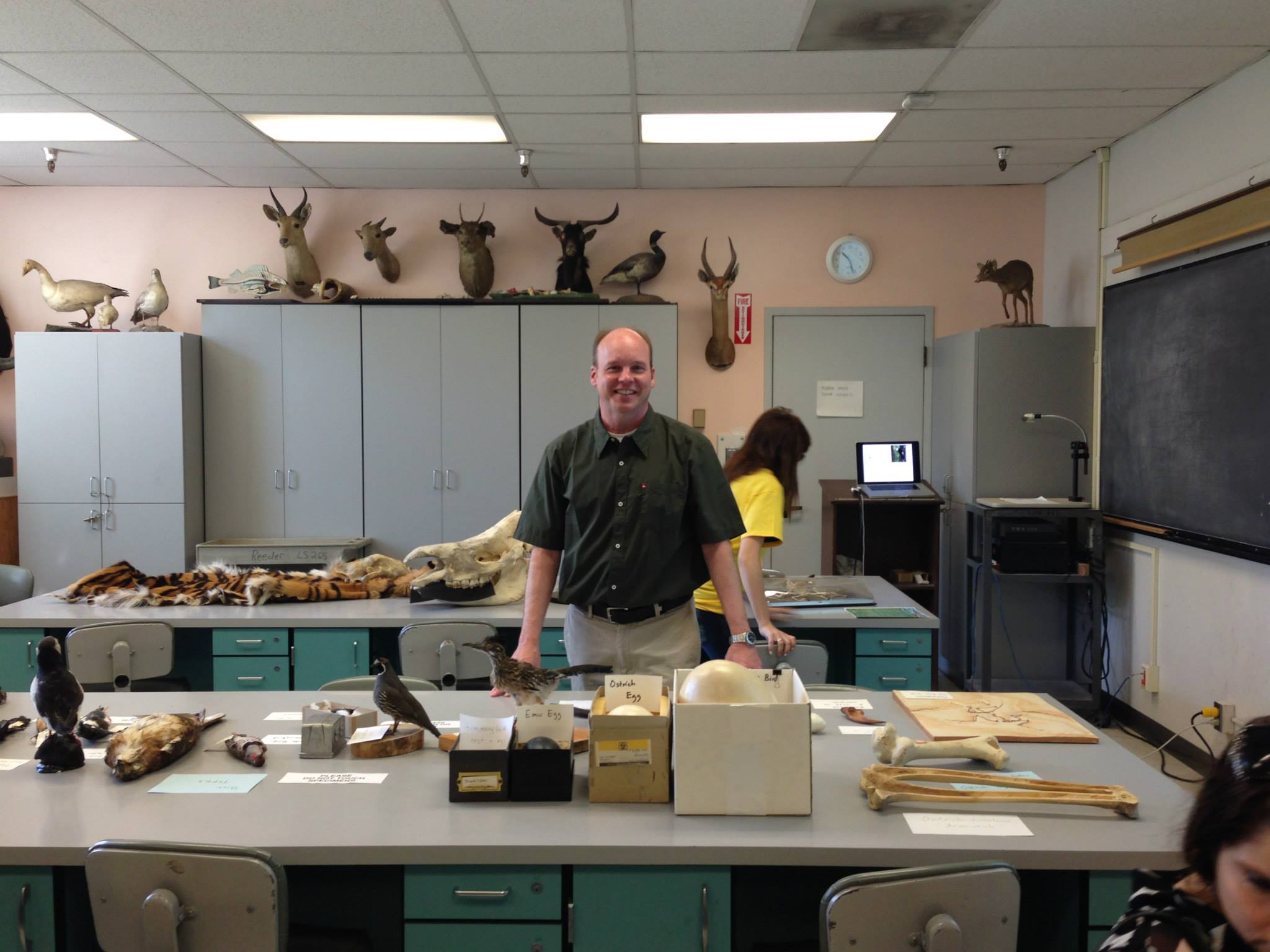
Last Saturday was the start of the San Diego Science Festival which coincided with the SDSU Open House. At part of these events, we showed off some of the collections of the SDSU Museum of Biodiversity. Birds were represented as well as the arthropod, mammal, and herpetology collections. It was a fun event with lots of students, parents, and kids. The kids asked the best questions!

1909158_10153947219690593_1379288510_o

Posted in Uncategorized | Comments Off on San Diego Science Festival/SDSU Open House

Congrats Luke, Allan, and Josh!

Lots of good news recently for Burns lab students: Burns lab MS student Luke Klicka has been accepted into the PhD program at the University of Kansas. Also, Allan Cabrero was awarded a prestigious summer internship at the Smithsonian and has also been accepted to grad school next fall. Lastly, former undergrad Josh Espinoza had his first paper published and has been accepted into the Bioinformatics graduate program at UC Santa Cruz.  Congrats to all!!   Update: Erik Funk, another undergrad researcher in the Burns lab, has been accepted to grad school at SDSU and will begin his MS in Fall 2014.

Posted in Uncategorized | Comments Off on Congrats Luke, Allan, and Josh!

New paper on the phylogeny of Sporophila seedeaters

Mason, N. A. and K. J. Burns. 2013. Molecular phylogenetics of the Neotropical Seedeaters and Seed-finches (Sporophila, Oryzoborus, Dolospingus). Ornitología Neotropical 24: 139-155. pdf

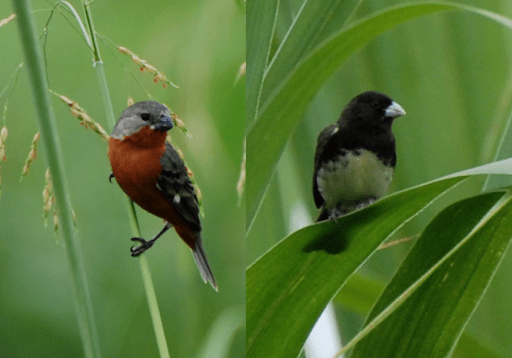
We recently published a paper in Ornitología Neotropical reporting on the phylogeny of seedeaters. Seedeaters are a type of tanager even though they have conical-shaped bills like finches. This group includes members of the genus Sporophila, Oryzoborus, and Dolospingus. This paper resulted from a side project of Nick Mason’s MS thesis and represents part of the lab’s larger body of work on tanager phylogenetics and diversification. We were able to include 33 of the 39 currently recognized species of Sporophila and found that the genus Sporophila is not monophyletic. Thus, we recommend merging all the species in Oryzoborus and Dolospingus into Sporophila. We also showed that previous groupings based on male plumage do not represent monophyletic groups, thus there is lots of convergence in plumage patterns and colors within the group.

Update: this article has been picked as an Editor’s Choice.

Sporophila2

Two of the 39 species of Sporophila. Ruddy-breasted Seedeater (Sporophila minuta) on the left, Black-and-white Seedeater (Sporophila luctuosa) on the right. Photos courtesy of Lee Calvert.

Posted in Uncategorized | Comments Off on New paper on the phylogeny of Sporophila seedeaters